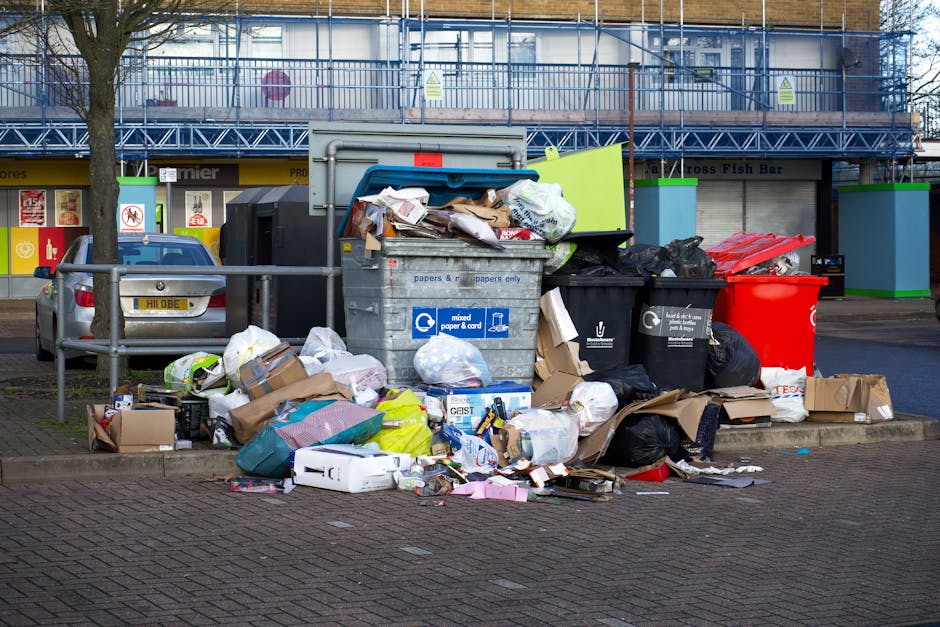
Rubbish clearance York Way Kings Cross quick quotes
If you need rubbish cleared quickly near York Way in King's Cross, you probably want two things at once: a fair price and a fast answer. That's really what Rubbish clearance York Way Kings Cross quick quotes is all about. You want to know what can be taken, how soon it can happen, and whether the quote you get is actually going to hold up when the team arrives.
In a busy part of London, that matters. Flats fill up, landlords need turnovers, offices change hands, and renovation debris has a habit of appearing faster than anyone planned. The good news is that a clear, well-run rubbish clearance service should make the process straightforward. No drama. No confusing jargon. Just a sensible quote, a time slot that works, and the mess gone before it starts becoming a bigger problem.
This guide breaks down how quick quotes work, what affects the price, who the service is best for, and how to avoid the usual traps. It also covers practical steps, compliance points, and a simple checklist so you can move from "I need this gone" to "sorted" with far less stress.
Table of Contents
- Why Rubbish clearance York Way Kings Cross quick quotes Matters
- How Rubbish clearance York Way Kings Cross quick quotes Works
- Key Benefits and Practical Advantages
- Who This Is For and When It Makes Sense
- Step-by-Step Guidance
- Expert Tips for Better Results
- Common Mistakes to Avoid
- Tools, Resources and Recommendations
- Law, Compliance, Standards, or Best Practice
- Options, Methods, or Comparison Table
- Case Study or Real-World Example
- Practical Checklist
- Conclusion
- Frequently Asked Questions
Why Rubbish clearance York Way Kings Cross quick quotes Matters
Quick quotes matter because waste problems are rarely tidy, and they rarely wait. A pile of old furniture in a hallway, builders' rubble on a landing, or office junk in a back room can block access, create safety issues, and make a property feel unfinished. In rental properties, that can delay move-ins. In homes, it can drag out a renovation or simply make life feel more chaotic than it needs to be.
When a quote comes quickly, you can make decisions while the situation is still manageable. That is especially useful in King's Cross, where space is tight and access can be awkward. If a job involves stairs, a narrow entrance, timed access, or shared corridors, the quote needs to reflect that properly. Otherwise the "cheap" option can become expensive very fast.
There's also a simple mental benefit. Let's face it, rubbish hanging around is irritating. You see it every time you walk past. It becomes one more task on a long list. A fast quote gives you a next step, and that alone can take the edge off the job.
Expert summary: the best rubbish clearance quote is not just the lowest number. It is the one that is quick, clear, realistic, and matched to the actual amount and type of waste you need removed.
For larger or mixed-load jobs, it can help to compare your clearance needs with related services such as house clearance, flat clearance, or office clearance. Those pages are useful if your waste is tied to a specific property type rather than just a general pile of rubbish.
How Rubbish clearance York Way Kings Cross quick quotes Works
The basic process is usually simple, though the details matter. A customer describes the waste, shares photos if possible, and receives a quote based on volume, type, access, and urgency. In many cases, that quote can be given very quickly because the team already knows how to estimate common loads. That part is a bit like packing a car boot. You can usually tell the difference between one chair and a whole room full of stuff.
Here's what good quoting normally looks like in practice:
- Initial enquiry: You explain what needs removing, where it is, and whether the job is urgent.
- Photo review or brief description: Clear pictures help more than a long message, especially if items are stacked or in awkward spots.
- Estimate or fixed quote: The team gives a price based on likely labour, disposal, and collection time.
- Booking: A time is arranged that works for access, parking, and your schedule.
- Collection: The rubbish is removed, swept up if agreed, and taken away for disposal or recycling.
Some jobs are straightforward. A few bulky items from a living room? Easy enough. Others are trickier: mixed builder's waste, heavy items, or a loft full of old bits and pieces that have been there since before the last phone upgrade, probably. In those cases, a quick quote still helps, but it should be based on a decent look at the job, not a guess.
If you want to understand what a provider should be able to offer beyond the basic pickup, a look at waste removal is helpful. It gives you a broader sense of how all-round clearance work is usually handled.
Key Benefits and Practical Advantages
There are a few clear reasons why fast quote turnaround is so valuable, especially in a dense area like York Way and the wider King's Cross neighbourhood.
- Speed of decision-making: You can move forward without waiting days for pricing.
- Less disruption: Mess is removed sooner, which helps daily life, trades, or tenancy changes.
- Better budgeting: You can plan around a realistic cost instead of guessing.
- Reduced stress: A quick response often reassures people who are already dealing with a busy move, a declutter, or a deadline.
- More accurate planning: Access issues, item types, and collection size can be handled before the crew arrives.
- Cleaner outcome: The sooner waste goes, the sooner you get your space back. Simple as that.
There's another advantage people sometimes overlook: a good quote process can help you separate legitimate clearance work from jobs that need a different approach. For example, a room full of old desks may point towards furniture clearance, while a business relocation might be better matched to business waste removal. Matching the service to the job is often where the real savings come from.
And yes, saving money matters. But saving time matters too. Especially if the hallway is full and you need to squeeze through with a laundry basket. Not glamorous, but very real.
Who This Is For and When It Makes Sense
This kind of service suits a wide range of people, and the trigger is usually one of three things: limited space, limited time, or both.
- Residents in flats or houses: Ideal if you are clearing old furniture, mixed household junk, or items after a move.
- Landlords and letting agents: Useful when a property needs to be turned around quickly between tenancies.
- Builders and trades: Handy for post-refurbishment debris or leftover materials.
- Office managers: Useful for desks, filing, packaging, and general workplace clutter.
- Homeowners: Good when garages, lofts, or spare rooms have become storage zones rather than usable spaces.
It makes sense when you do not have the time, van, labour, or disposal know-how to tackle the job yourself. It also makes sense if the item mix is awkward. A few old chairs, a broken table, some cardboard, a dismantled wardrobe, a bag of odds and ends... that sort of job is exactly where professional clearance tends to be better than trying to do it in bits over three weekends.
For spaces that have filled up gradually, it can help to think in terms of the room itself. A cluttered attic may be better served by loft clearance, while a messy storage area might be more suited to garage clearance. The label matters less than the end goal: getting usable space back.
Step-by-Step Guidance
If you want a quick quote that is actually useful, not just fast, follow this sequence.
- Sort the waste roughly by type. Keep furniture, general rubbish, and builders' materials separate if you can. It makes pricing easier.
- Take clear photos. Wide shots and a few close-ups are best. If access is tight, show the stairs, lift, driveway, or loading point too.
- Measure anything bulky. A rough idea of size helps, especially for sofas, mattresses, cabinets, or dismantled units.
- State the urgency. Same-day or next-day requests should be said upfront. Don't leave it for the final line of the message.
- Ask what is included. Check whether loading, labour, disposal, and VAT are part of the quote.
- Confirm access details. Parking restrictions, entry codes, and floor level all matter in King's Cross.
- Prepare the items. Move waste to one area if safe to do so. It can reduce collection time and confusion.
- Review the quote carefully. Make sure the scope matches what you showed. If it seems vague, ask for clarification.
A small but useful tip: if you know there are multiple categories of waste, say so early. A quote for a few furniture items is not the same as a load that includes building waste, packaging, and old appliances. Being upfront usually gets you a better result, and often a smoother day.
Expert Tips for Better Results
After enough clearances, a few patterns become obvious. The people who get the best quotes are usually the ones who make the job easy to assess, not the ones who bargain hardest.
Be specific, but not long-winded. "One sofa, one mattress, four bags, and a broken sideboard" is better than "a bit of stuff." Helpful to you, helpful to the team, everyone wins.
Show awkward access clearly. Narrow stairwells, basement steps, shared hallways, or no-parking zones can all affect the final price. Better to mention it early than have a surprise later.
Ask about mixed loads. Mixed waste often needs sorting and different disposal routes. That can change the quote and the collection plan.
Check whether the property is part of a managed building. Some buildings have collection windows or access rules. That matters more than people expect.
Choose the right clearance type. A general rubbish collection is not always the best fit. If you are dealing with a specific setting, related services like builders waste clearance or furniture disposal may be more appropriate.
To be fair, a lot of the difference between a smooth job and a frustrating one comes down to the quote stage. That first message sets the tone. Keep it honest and clear, and the rest usually follows.
Common Mistakes to Avoid
Most quote problems are preventable. The biggest ones are surprisingly ordinary.
- Using vague descriptions: "Lots of junk" sounds casual, but it is hard to price properly.
- Hiding access issues: If there is no lift or parking is restricted, say so.
- Forgetting item types: Fridges, mattresses, plasterboard, and rubble can change handling requirements.
- Choosing only on price: A low quote can be misleading if it excludes labour or disposal.
- Not checking the collection window: Fast quotes are useful, but only if the service can actually attend when needed.
- Assuming every clearance is the same: Office waste, household clutter, and renovation debris are different jobs.
One slightly annoying but common issue is underestimating the volume. A pile that looks "small" from one angle can fill a van once it is broken down and loaded. Old wardrobes are especially good at this trick. They look innocent until they are in pieces on the floor.
Another mistake is failing to ask what happens after collection. If recycling and responsible disposal matter to you, make sure the provider can explain their approach. That is where recycling and sustainability becomes more than a nice phrase. It should form part of how the job is handled.
Tools, Resources and Recommendations
You do not need fancy tools to get a solid quote, but a few basics help a lot.
- Phone camera: Use it to take clear photos from different angles.
- Simple measurements: A tape measure helps with bulky items and tight access points.
- Notes app: Handy for listing item types, quantity, and any special access instructions.
- Calendar reminder: Useful if you are comparing a few quotes or coordinating around a move or contractor visit.
- Payment method ready: Faster booking often follows when payment details and preferences are sorted early.
There are also a few website pages that can support your decision-making if you want to understand the provider better before booking. For example, pricing and quotes is the natural place to look for how estimates are typically formed, while about us can help you understand the company behind the service.
If you are the kind of person who likes to check the fine print before anyone turns up with a van, fair enough. That is sensible. You may also want to review payment and security so you know how transactions are handled, and insurance and safety for peace of mind around property handling and site work.
Law, Compliance, Standards, or Best Practice
Rubbish clearance in the UK should be carried out carefully and responsibly. While you do not need to become an expert in waste rules just to clear a flat or office, it does help to understand the basics.
As a customer, you want assurance that waste is handled lawfully, transported properly, and taken to the correct facility. Responsible providers should be able to explain their process in plain English. If they cannot, that is a red flag. Not dramatic, just a practical one.
Best practice usually includes:
- clear descriptions of what is being removed
- safe lifting and loading methods
- reasonable care in shared buildings and tight access areas
- separation of items where recycling is possible
- transparent pricing terms
- appropriate insurance and safety awareness
If you are arranging clearance for a business, compliance becomes even more important. Office and commercial waste should be managed with particular care, and it is sensible to ask questions before booking. For domestic customers, the same principle still applies: the service should be lawful, clear, and respectful of the property.
It is also wise to read the provider's terms and conditions and complaints procedure. Nobody books a clearance hoping to need them, but it is better to know where you stand. A decent operator should make this easy.
Options, Methods, or Comparison Table
People often compare a professional rubbish clearance quote with doing the job themselves. Both can work, but they suit different situations.
| Option | Best for | Pros | Watch out for |
|---|---|---|---|
| Professional rubbish clearance | Mixed waste, bulky items, urgent jobs, awkward access | Fast, convenient, less lifting, disposal handled for you | Cost varies with volume, access, and waste type |
| Self-hire van or DIY disposal | Small loads, flexible timing, people with transport and lifting help | Can be cheaper for simple jobs | Time-consuming, physically hard, disposal rules and transport are on you |
| Targeted specialist clearance | Furniture, builders' debris, lofts, garages, offices | More precise pricing and better-fit service | Needs accurate description to choose the right option |
For a lot of London jobs, the professional option wins simply because it removes friction. You do not have to hire a van, find parking, or unload heavy bits at the other end. On the other hand, if you only have a couple of light items and plenty of time, DIY can be workable. The right answer depends on the job, not the theory.
Case Study or Real-World Example
A typical example is a tenant moving out of a third-floor flat near York Way. There is a sofa, a bed frame, a broken office chair, and several bags of general clutter collected over a couple of years. The hallway is narrow, the lift is unreliable, and the move-out date is tomorrow morning. A same-day or next-day quote is needed, not next week.
In a case like that, the strongest approach is simple: send photos, mention the floor level, explain the access, and say exactly what needs taking. The quote can then reflect the real work rather than a generic estimate. If the provider knows the lift is out of action, they can prepare for stairs and adjust staffing accordingly. That avoids the awkward "Oh, you meant three flights?" moment nobody enjoys.
Now compare that with a small office in the same area clearing out a few desks, boxes, and archived items. The job might sound similar at first glance, but the logistics are different. There may be building access rules, loading restrictions, or a need to avoid disturbing other tenants. This is where a service such as office clearance is often more suitable than a one-size-fits-all rubbish removal quote.
In both scenarios, the lesson is the same: the quicker and clearer the information, the better the quote. Not fancy. Just effective.
Practical Checklist
Use this before requesting your quote. It saves time and usually improves accuracy.
- List every item or pile that needs removing.
- Take photos from at least two angles.
- Note the address, floor level, and access restrictions.
- Check whether parking is easy, limited, or restricted.
- Separate items into furniture, general rubbish, and building waste if possible.
- Flag anything heavy, awkward, dirty, or potentially fragile.
- Tell the provider if the job is urgent.
- Ask what the quote includes and whether there are any exclusions.
- Read the provider's payment and service terms.
- Confirm your preferred collection date before you assume anything.
If you tick off those points, you are already ahead of most people. Truth be told, that is enough to make the whole process feel much less annoying.
Get a free quote today and see how much you can save.
Conclusion
Fast, accurate rubbish clearance quotes are valuable because they turn a messy, uncertain job into a clear plan. That matters in York Way and King's Cross, where access can be tight, schedules can be packed, and nobody wants waste hanging around for longer than necessary. A strong quote is specific, transparent, and based on the real job in front of you.
Whether you are clearing a flat, shifting office waste, dealing with builders' debris, or just trying to reclaim a room that has slowly become a storage zone, the best next move is usually the same: gather a few clear details, ask for a proper quote, and choose the service that fits the job rather than the one that sounds cheapest on the surface.
If you approach it that way, the process tends to feel a lot calmer. And honestly, getting your space back can feel better than you expect. A blank floor, a cleared hallway, a room that breathes again - small thing, big relief.
Frequently Asked Questions
How fast can I get a rubbish clearance quote in York Way, Kings Cross?
In many cases, a quote can be provided quickly once the provider has a clear description or a few photos. Same-day responses are often possible for straightforward jobs, but complex access or mixed waste may take a little longer.
What information should I send for a quick quote?
Send the item list, a rough volume estimate, photos, floor level, access details, and whether the job is urgent. If there are heavy items or unusual materials, mention those too.
Is a quick quote likely to be accurate?
It can be, provided the information is clear and honest. The more visible and specific the waste is, the better the estimate. Hidden items or vague descriptions can lead to changes later.
Do I need to sort my rubbish before asking for a quote?
No, but it helps if you can separate obvious categories like furniture, general rubbish, and builders' waste. That makes pricing easier and usually improves quote accuracy.
Can you quote for bulky items as well as general rubbish?
Yes, bulky items are common in clearance work. Sofas, wardrobes, beds, and office furniture are often quoted separately or as part of a broader clearance job.
What affects the cost of rubbish clearance most?
Volume, weight, access, waste type, and urgency are the biggest factors. Parking difficulty and stairs can also affect the quote in busy London locations.
Is it cheaper to book a full clearance than lots of small collections?
Often, yes. If you have several items or a full room to clear, a single well-planned collection is usually more efficient than multiple small trips.
Do I need to be at the property during collection?
Sometimes yes, sometimes no. It depends on access arrangements and how the job is being handled. If someone else can provide entry and instructions, that can work too.
What should I check before accepting a quote?
Check what is included, whether labour and disposal are covered, the collection time, payment terms, and whether the provider can handle your specific waste type.
Can rubbish clearance help with a flat, office, or loft?
Yes, and those spaces often benefit from a more tailored approach. Related services such as flat clearance, office clearance, and loft clearance can be more suitable than a general one-off collection.
What if I have builders' rubble or renovation waste?
Say so clearly when requesting the quote. Builders' waste often needs different handling from household rubbish, so it is best assessed separately.
How do I know if a provider is trustworthy?
Look for clear pricing, sensible questions, visible service terms, and straightforward answers about safety, disposal, and recycling. If something feels unclear, ask again. A good provider will not mind.